Practical Generative AI Projects for Everyday Work
What a Two-Day Sprint Can Teach You About Building GenAI Tools
Most professionals have heard about generative AI, yet many still wonder how to turn it into something useful for their own teams. The gap between reading about large language models and actually deploying a working application can feel wide. A structured, hands-on approach that compresses the learning into two days helps bridge that gap. This article explains what such a sprint involves, how it works, and what it means for professionals in administration, operations, and customer service roles.
What Is a GenAI Builder Sprint?
A GenAI builder sprint is a short, intensive workshop where participants move from idea to a functioning generative AI prototype. Instead of spending weeks on theory, the focus is on building something real. You learn by doing, guided by facilitators who understand both the technology and the practical constraints of a workplace. The sprint typically covers the full pipeline: identifying a suitable problem, selecting the right model or API, preparing data, writing prompts, testing outputs, and deploying a simple interface.
The key difference from a traditional course is the compressed timeframe and the emphasis on a concrete deliverable. By the end of the second day, you have a tool you can show colleagues, test with real data, and iterate on further. This format suits busy professionals who need to see results quickly and who learn best through hands-on experimentation.
How the Sprint Works
The sprint begins with a short discovery phase. Participants list repetitive tasks that consume time, such as drafting emails, summarising reports, answering common customer queries, or generating status updates. Each task is evaluated for suitability: is it rule-based enough that a language model can handle it? Does it require access to sensitive data that needs careful handling? Can the output be reviewed before use?
Once a task is chosen, the group learns how to connect to a generative AI service, typically through an API. No deep coding background is required; many services offer low-code or no-code options. The real work lies in crafting effective prompts. A good prompt is specific, includes examples, and sets clear constraints. For instance, instead of asking "Write a reply", a better prompt might say "Write a polite, concise reply to a customer who received a damaged package, offering a replacement and an apology. Keep it under 100 words."
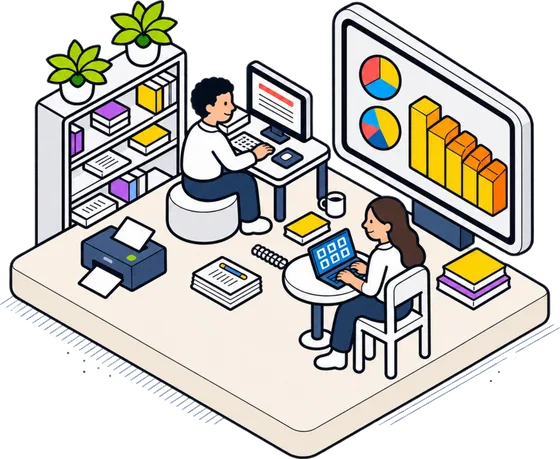
The sprint also covers basic testing. Participants run their prototype against several scenarios to check for errors, inappropriate responses, or broken logic. They learn to adjust prompts, add guardrails, and handle edge cases. By the end of the second day, the prototype is ready for a small pilot with real users.
What It Means for Administration
Administrative work is full of structured, repetitive writing. Think of meeting minutes, expense report summaries, travel approval letters, or status updates. A generative AI tool can draft these in seconds, freeing staff to focus on higher-value decisions. For example, an admin officer could feed raw notes from a project meeting into a tool and receive a formatted summary with action items and owners. The officer reviews and adjusts, cutting drafting time by half or more.
Another common use is email triage. An AI tool can read incoming emails, identify urgency, categorise them (e.g., request for information, complaint, feedback), and even suggest a draft reply. The human worker approves or edits before sending. This reduces the cognitive load of switching between many small tasks and helps maintain consistent tone across responses.
What It Means for Operations
Operations teams deal with data, reports, and process documentation. Generative AI can help generate routine reports from spreadsheets or databases, flag anomalies, and explain trends in plain language. A warehouse supervisor might use a tool to get a daily summary of inventory levels, slow-moving items, and reorder suggestions without having to run multiple queries.
Another operational use is creating standard operating procedures from recorded steps. If a technician logs a repair process in a shared document, an AI tool can rewrite it into a clear, step-by-step guide. Over time, this builds a library of institutional knowledge that is easy to search and update.
What It Means for Customer Service
Customer service is perhaps the most natural fit for generative AI. The core task - answering questions, resolving issues, and maintaining a helpful tone - is language-intensive. A well-tuned AI can handle first-line queries, providing consistent answers based on a knowledge base. The human agent steps in for complex or sensitive cases.
Beyond chatbots, generative AI can assist agents directly. While a customer is on the phone, the tool can pull up relevant policies, suggest responses, and draft follow-up emails in real time. This reduces hold times and improves accuracy. It also helps new team members ramp up faster, since they have an AI assistant that never forgets the latest product update.
Getting Practical Experience
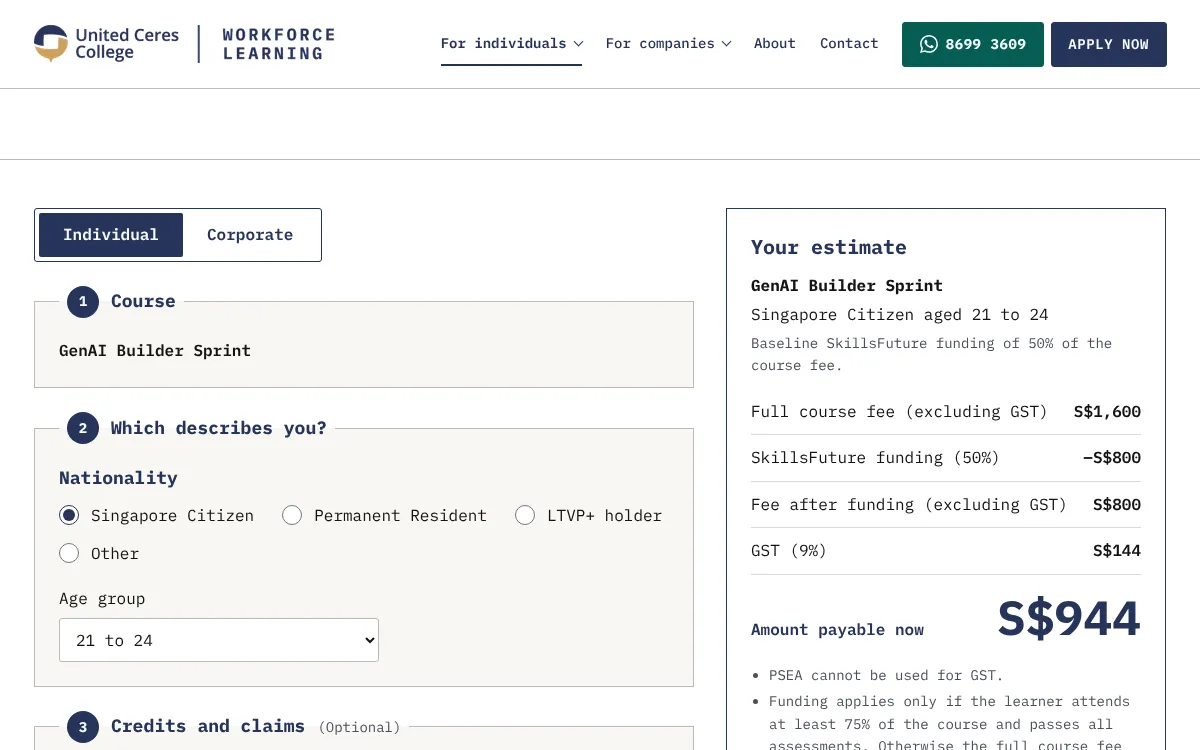
The ideas above are not theoretical. Many organisations have run internal sprints to build exactly these kinds of tools. A programme like the United Ceres College GenAI Builder Sprint gives participants a structured environment to try it for themselves. Over two days, attendees work through the full process with guidance, leaving with a prototype they can deploy in their own team.
One of the biggest challenges in adopting generative AI is knowing where to start. A sprint removes that paralysis by providing a clear path. You do not need to be a developer or a data scientist. The emphasis is on identifying a real, small-scale problem and solving it with a simple AI tool. Once you have done it once, the process becomes repeatable, and you can apply the same approach to other tasks.
What to Watch Out For
Generative AI is powerful but not flawless. Outputs need review, especially when dealing with sensitive information or high-stakes decisions. A tool that drafts a customer email should be checked for tone, accuracy, and compliance with company policy. Similarly, a report generator should be tested against known data to ensure it does not hallucinate numbers or facts.
Data privacy is another concern. When using an external API, you need to ensure that customer or internal data is handled securely. Some organisations run models on their own servers or use services that guarantee data not being used for training. The sprint should cover basic data governance considerations so participants know what to ask their IT teams.
Why It Matters Now
The cost of entry for generative AI has dropped dramatically. Most providers offer free tiers or pay-as-you-go pricing. This means even small teams can experiment without a large budget. The risk is not in trying something small; it is in waiting too long while competitors test and learn. A two-day sprint is a low-risk, high-learning investment.
Programmes such as the United Ceres College GenAI Builder Sprint are designed to make this accessible to professionals who are not technical specialists. The focus is on practical outcomes, not on becoming an AI expert. After the sprint, participants have a working tool, a clear understanding of the process, and the confidence to build more.
Ready to Start
If you work in administration, operations, or customer service, and you have a repetitive language task that takes up too much time, you already have a candidate for a generative AI prototype. The next step is to find a structured way to build it. A focused, hands-on sprint gives you the momentum to turn an idea into something real in just two days.
United Ceres College on social media
 Twitter
 LinkedIn
 Facebook
 Instagram
 YouTube
Ends · USEFULMODELIDEASDIGEST